Bedly
Booking system with an AI co-host, designed and built with AI
The full case study: the problem, the product and where AI came in.
Booking and guest management with an AI co-host, for small hospitality businesses. Designed and built with AI agents.
Bedly is for people who run one to ten rooms: a B&B, a guesthouse, a few apartments. Today they do that job across a spreadsheet, a phone and three booking sites that don't talk to each other.
The existing systems take months to set up. Someone with four rooms wants to be taking bookings this afternoon.
Checking IDs, registering guests with the police where the law asks for it, handing over the door code: all of it ties the host to the door.
A host is rarely at a desk. Whatever runs the day has to work in one hand first.
Every property gets a booking page to share as a link or embed in its own site. Guests pick dates and a room and pay by card, Apple Pay, Google Pay or TWINT, with no account.
Guests upload their ID and take a short selfie from their phone. Bedly checks the face against the document, files the guest details with the Italian police where required, and only then sends the entry instructions.
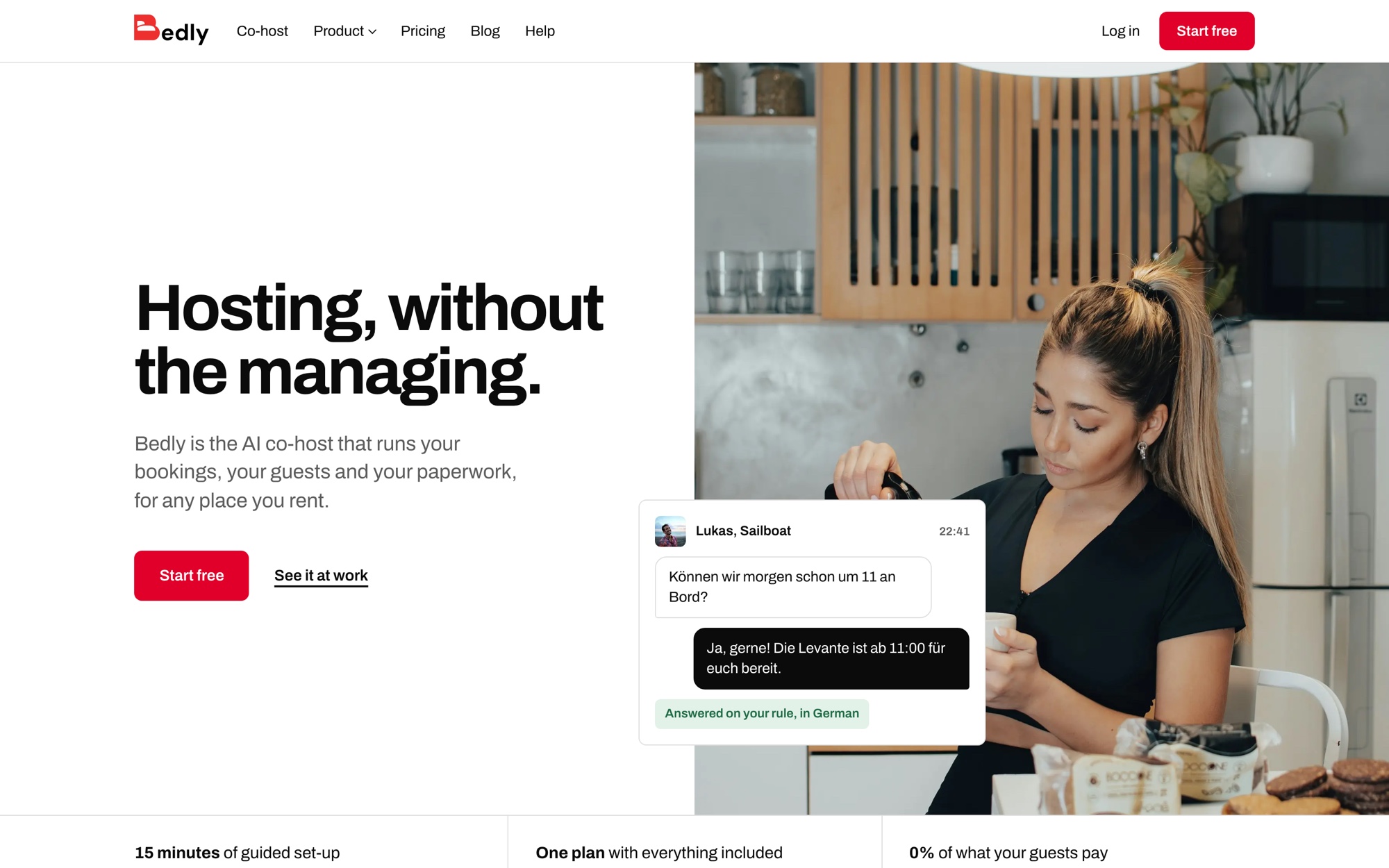
It reads every guest message in any language and answers from the host's house guide and calendar. When the rules don't cover a question, it writes the reply and asks the host first.
Arrivals and departures, room status, guest messages and what the property earned, in one place.
Money goes straight to the host's own Stripe account. Bedly charges a flat monthly fee and takes no cut of a booking.

From their own phone, before arriving. The reason for the ID is on the screen, not behind a link.

In the guest's language, from the house guide, and it says where each answer came from.

When an answer would commit the host, it stops, writes the reply and waits for a yes.

Once everyone is registered, the code arrives with the way to the door. Nobody has to be there.
I designed the product and wrote the rules; AI coding agents wrote the code against them, with automated tests they have to pass before anything ships.
Components, tokens and usage rules are published as data, so an agent picks the right component instead of inventing one. This site is built on the same system.
It answers, it asks, it acts on the host's rules. A decision the host makes once becomes a rule, and next time the co-host handles it alone.
What the product does, how it looks and what is allowed to ship stay my decisions. The agents make it faster, not different.
Bedly is in private pilot with a small group of hosts in Italy and Switzerland. The public site stays closed until launch.